
Did AI break the B2B funnel or just make it invisible?
“Zero-click” search is disrupting inbound B2B marketing
B2B marketers are witnessing a fundamental shift in how buyers discover and engage with content. The familiar marketing funnel, where prospects move from awareness to consideration to decision through trackable touchpoints, seems to be vanishing. But is the funnel truly broken, or has it simply gone “invisible”? AI-driven search hasn’t destroyed the B2B funnel so much as made large parts of it invisible. In this new landscape, success relies on adapting to reputation economics, grappling with zero-click journeys and lost attribution, and building a durable content moat rooted in trust and unique insights.
According to Profound, an AI visibility platform optimising brand presence, nearly 80% of buyers rely on answer engines for at least half of their decision-making process. This leads to an “invisible funnel” where most of the early touchpoints and research steps leave no trace in your web analytics. When the first interaction seen is a demo request or contact form, it might feel like leads are appearing from thin air, the result of an invisible funnel that started and progressed entirely within AI-driven channels
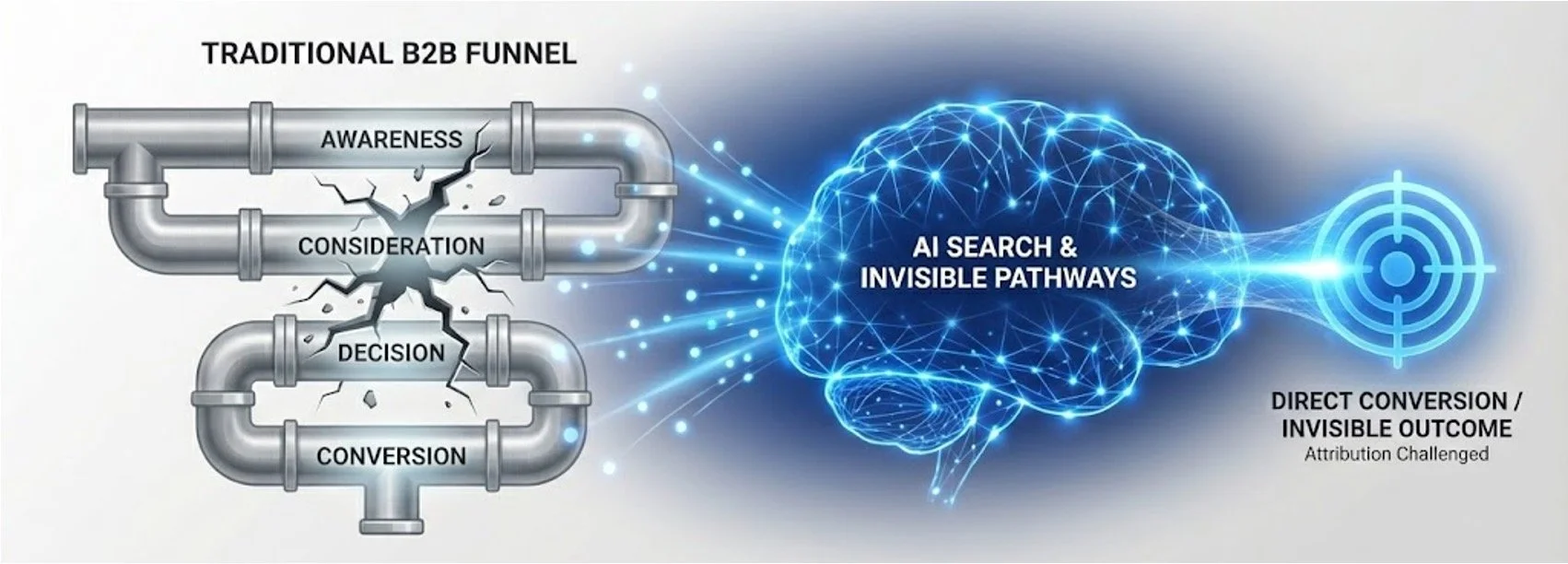
Attention is harder than ever, but it’s no longer enough. Trust and belief are what serve the expectations of more disciplined buyers
Buyers emerging from this invisible funnel may already be far down the path to a decision. Bain & Company reports that 85% of B2B buyers ultimately purchase from one of the vendors they had on their radar from the very start of their research. If AI assistants are front-loading that research, buyers might form a “day one list” without ever engaging with broader content or sales outreach. This makes it harder for marketers to insert new brands or influence consideration mid-funnel. If you weren’t in that initial AI-fed answer, you might not exist in the buyer’s mind at all.
AI systems don’t present ten blue links; they deliver one synthesised answer drawn from multiple sources. There is no first page of results to dominate. You’re either in the AI’s answer box, or you’re invisible. This paradigm shift is what is called “reputation economics” over traditional SEO tactics. In essence, AI search algorithms curate sources based on trust, semantic authority, and consensus rather than just keyword relevance. A brand’s overall digital reputation, the consistency of its message, the credibility of its content, and the frequency of third-party mentions, becomes the deciding factors in whether the AI will trust and cite it. In Simple words -
From SEO to Reputation Economics
A well-known brand with strong thought leadership and widespread third-party mentions stands a far better chance of being referenced by AI, whereas a little-known website that merely nailed its SEO keywords may be ignored.
Channels
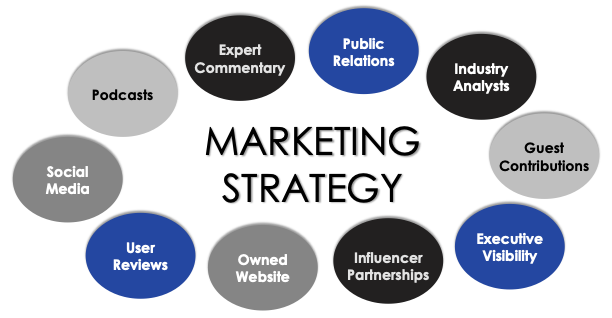
Instead of chasing search rankings alone, B2B marketers need to invest in broader reputation signals. Public relations, industry analyst relations, guest contributions, executive visibility, podcasts, expert commentary, user reviews, social media and influencer partnerships all help ensure that when an AI scours the digital universe for answers, it finds the brand everywhere it looks.
If thousands of independent sources describe your company as the best option for a use case, AI internalises that association. AI systems recognise a distributed footprint as consensus.
Messaging
Consistency and clarity of messaging have also become paramount. AI models are trained on vast amounts of text. If the brand’s story is muddled or inconsistent across different channels, the AI may struggle to categorize you correctly. Companies need to ensure their value proposition and expertise are articulated clearly and uniformly in press releases, website copy, LinkedIn posts, and beyond.
The new marketing imperative is not just to win over human buyers, but to educate AI about your brand’s credibility and value
These changes pose a challenge: How do you measure marketing performance when so many buyer interactions go unrecorded?
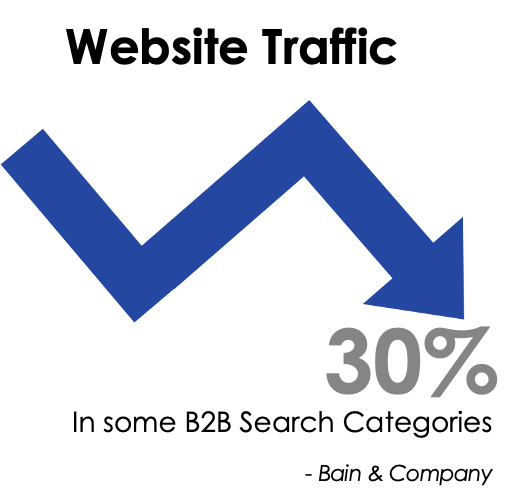
Metrics like website traffic, click-through rates, lead conversions, and attribution models that credit each channel for its role in a sale are either declining or evaporating. Early touchpoints like clicks on a search ad, blog visits, webinar sign-ups, and demo requests are essentially invisible to the company’s tracking tools.
So, start measuring what you can in an AI-mediated journey – brand mentions and citations.
Instead of making “traffic from AI” the north-star metric, since traffic may undercount the impact and focus on “AI visibility”. This means optimising content to appear in AI answers and tracking the share of voice in AI channels. An interesting flip side to fewer clicks is that the clicks you do get from AI-informed buyers tend to be higher quality. Forrester research noted that buyers who arrive at the website through AI recommendations often come more informed, with higher intent to purchase.
If LLMs cites your blog or mentions your product in answers, that’s a strong signal of visibility – even if it didn’t generate a click. G2 in their inaugural AEO category Grid have names Profound, Otterly AI, Scrunch AI, Semrush as some of the leading platforms in Answer Engine Optimization (AEO) /Generative Engine Optimization (GEO)
Zero-click doesn’t mean zero opportunity – it means the opportunity is shifting to before the click, in the invisible realm of AI
If AI is going to curate only a few trusted voices on any given topic, you want to be one of those voices. That requires owning a content moat, a body of unique, authoritative content that others cannot easily replicate or replace.
Building a Durable Content Moat
Third-Party Content
User review aggregators
AI answers often surface “what users say” by summarizing common pros and cons, helping buyers balance vendor messaging with on the ground experience. That’s why campaigns that drive a steady, consistent stream of high quality reviews across major platforms can materially increase your chances of appearing in AI generated shortlists, even when the buyer never visits your site.
Editorial mentions & PR
Earned media here is not just awareness; it is evidence. AI systems are conservative about what they repeat, so they lean on high-trust sources. Strong PR in respected outlets gives AI quotable, verifiable claims about your differentiation, customer outcomes, and category position, increasing the odds of being included in “top vendors” and “compare options” prompts.
Category Rankings
When users ask AI “best tools for X,” list style rankings on reputable sources like G2/TrustRadius are easy for AI to parse and reuse. High category placement and rich review volume on such platforms increase the chances of mentions in AI-generated “top options” answers and comparison tables.
Influencer Blogs & Sponsored Articles
AI often learns category narratives from widely read creators and niche experts. Influencer content creates additional independent descriptions of the product, use cases, competitor comparisons and reviews. This strengthens the consensus signal AI relies on while boosting organic discovery.
Social Media Content
Adweek mentions that “People and brands are flocking to Reddit because it’s one of the last places for authentic, unfiltered human conversation on the internet.” It has increasingly become one of the most cited domain on LLMs according to Profound. Being discoverable in relevant threads, with authentic community credibility, increases the likelihood of gaining mentions in search results.
LinkedIn functions as a high-signal environment: real people, real job titles, and repeated discussions. It captures how practitioners talk about problems in natural language, which aligns closely with how users prompt AI tools. Practitioner-led content creates a dense web of contextual mentions that AI models can safely learn from boosting visibility.
Youtube
AI search systems, especially Google AI summaries & Gemini, surface video content when users ask “How does this work,” “Show me an example,” or “Compare tools.” Product demos, implementation walkthroughs, customer use cases, and influencer reviews on YouTube videos that are structured, transcribed and time-stamped, and highly scannable, making them easy for AI systems to summarise and reference in multimodal search results.
Buyers and AI models both look for clear signals of expertise and authenticity. Prioritise content written by your executives and content co-created with credible industry experts, influencers, and partners. Interviews, guest articles, and research collaborations add independent validation and sharper perspectives, strengthening the content moat while expanding reach
Owned Content
Thought Leadership & Research
High-quality content doesn’t just attract prospects; it signals expertise to AI models, making it more likely your insights get included. Whether it’s quarterly research reports, unique case studies, or data analyses, create content that offers knowledge only you can provide.
Expert Commentary
AI search heavily serves “how do I do X” and “how does X work” queries. Great docs and tutorials produce precise, quotable explanations and step-by-step instructions that AI can reuse, and they capture high-intent queries where buyers are evaluating usability and implementation.
Documentation, Tutorials, How-to guides
The convergence of messaging across all these channels increases what is described as “entity ”authority”. It is the likelihood that a brand is recognised as a legitimate actor in a category. The companies that excel here treat content not as a cost centre but as a strategic asset – “content as infrastructure”. This is their AI visibility strategy. By creating high-value content and saturating their category with it, they build a moat of trust that both shields them from competitors and signals to AI systems that they are a go-to authority. In effect, this content moat turns the AI-driven, zero-click environment from a threat into an advantage: your content might reach buyers without requiring a click, via AI or word-of-mouth, and by the time that buyer engages, you’ve already shaped their thinking.
The B2B marketing funnel isn’t broken. It is evolving into something more complex and less visible. Those marketers who cling to the old playbook of easy clicks and traditional SEO may indeed feel like their funnel has collapsed. Whereas, those who embrace the “invisible” funnel, investing in reputation, rich content, and new measures of success, will find that buyers are still flowing through – even if the path they took to your door doesn’t show up on Google Analytics. In the end, what seems invisible is made visible in the outcomes: higher-intent leads, faster trust-building, and brand preference. The challenge and opportunity of the AI-driven era is to cultivate these outcomes by being the trusted voice that AI amplifies and buyers seek out. The funnel is still there; it’s just waiting for savvy marketers to shine a light.